
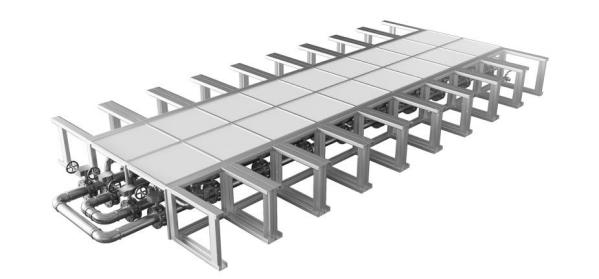
Prefabricated Stainless-steel Pipe Network
Secondary-side Prefabricated Pipe Network
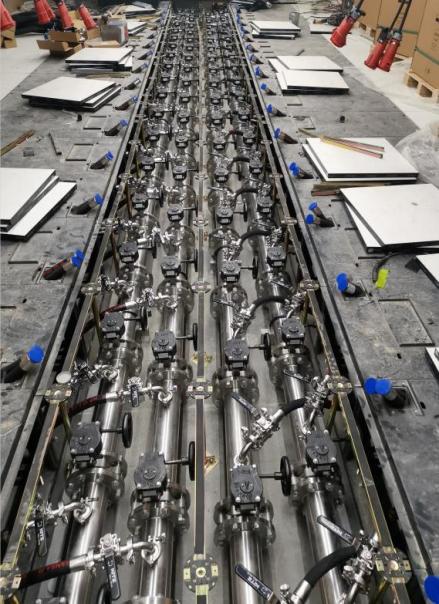
The secondary-side prefabricated pipe network uses stainless steel pipes and valves with quick sanitary clamp connections. Its economical, low-resistance design is tailored to each project and includes pressure-drop simulation testing under business-load and partial-fault conditions.
Discuss this productFeatures & technical specifications1 specification table
Product features
- Factory prefabrication and forming
- Factory pressure-holding leak test and weld inspection
- Disassembly and numbering after testing
- Ultrasonic cleaning
- Acid pickling and passivation of welding oxide scale
- Electrical conductivity no higher than 10 μS/cm after cleaning
- Pure-water circulating flushing
- Water-quality inspection and drying
- Clean pipe spools are sealed for transport after disassembly and ultrasonic cleaning.
| Stage | Source requirement |
|---|---|
| Design | Stainless-steel pipes and valves with quick sanitary clamp connections; project-specific economical, low-resistance design |
| Simulation | Pressure-drop testing under business load and partial-fault conditions |
| Prefabrication | Factory forming and prefabrication |
| Inspection | Factory pressure-holding leak test and weld inspection |
| Identification | Disassemble and number pipe spools after testing |
| Ultrasonic cleaning | Clean after disassembly; seal cleaned spools with cling film for transport |
| Pickling / passivation | Strict removal of welding oxide scale |
| After pickling / passivation cleaning | Electrical conductivity ≤10 μS/cm; dry afterward |
| Circulating flush | Pure water with electrical conductivity ≤10 μS/cm |
| Final inspection | Inspect water quality after cleaning; dry pipework |
Reference conditions & selection notes
- Conductivity ≤10 μS/cm is the stated post-cleaning / flushing requirement. It is not declared as the universal operating-coolant conductivity limit.
- Pipe sizing and pressure-drop validation depend on the project layout, server resistance, operating load and partial-fault cases.
Liquid Cooling Manual, pp. 31–32